Showing posts sorted by relevance for query version 15.0. Sort by date Show all posts

Tuesday, September 13, 2022

Announcing The Unicode® Standard, Version 15.0

[Nag Mundari image] Version 15.0 of the Unicode Standard is now available, including the core specification, annexes, and data files. This version adds 4,489 characters, bringing the total to 149,186 characters. These additions include two new scripts, for a total of 161 scripts, along with 20 new emoji characters, and 4,193 CJK (Chinese, Japanese, and Korean) ideographs. The new scripts and characters in Version 15.0 add support for modern language groups including:
  • Nag Mundari, a modern script used to write Mundari, a language spoken in India
  • A Kannada character used to write Konkani, Awadhi, and Havyaka Kannada in India
  • Kaktovik numerals, devised by speakers of Iñupiaq in Kaktovik, Alaska for the counting systems of the Inuit and Yupik languages
Among the popular symbol additions are 20 new emoji, including hair pick, maracas, jellyfish, khanda, and pink heart. For the full list of new emoji characters, see emoji additions for Unicode 15.0, and Emoji Counts. For a detailed description of support for emoji characters by the Unicode Standard, see UTS #51, Unicode Emoji.

[Image credit Noto Emoji]

Other symbol and notational additions include:
Support for other languages and scholarly work includes:
  • Kawi, a historical script found in Southeast Asia, used to write Old Javanese and other languages
  • Three additional characters for the Arabic script to support Quranic marks used in Turkey
  • Three Khojki characters found in handwritten and printed documents
  • Ten Devanagari characters used to represent auspicious signs found in inscriptions and manuscripts
  • Six Latin letters used in Malayalam transliteration
  • Sixty-three Cyrillic modifier letters used in phonetic transcription
Important chart font updates include:
  • A set of updated glyphs for Egyptian hieroglyphs, in addition to standardized variation sequences to support rotated glyphs found in texts
  • Improved glyphs for Unified Canadian Aboriginal Syllabics, which provide better support for Carrier and other languages
  • A new Wancho font, with improved and simplified shapes
Updates to the CJK blocks add:
  • 4,192 ideographs in the new CJK Unified Ideographs Extension H block
  • One ideograph in the CJK Unified Ideographs Extension C block
Unicode properties and specifications determine the behavior of text on computers and phones. The following six Unicode Standard Annexes and Technical Standards have noteworthy updates for Version 15.0:
  • UAX #9, Unicode Bidirectional Algorithm, amends the note in UAX9-C2 to emphasize the use of higher-level protocols to mitigate potential source code spoofing attacks.
  • UAX #31, Unicode Identifier and Pattern Syntax, provides more guidance on profiles for default identifiers, clarifies the use of default ignorable code points in identifiers, and discusses the relationship between Pattern_White_Space and bidirectional ordering issues in programming languages.
  • UAX #38, Unicode Han Database, adds the kAlternateTotalStrokes property. The kCihaiT property’s category was changed to Dictionary Indices, the kKangXi property was expanded, and Sections 3.0, 3.10, and 4.5 were added.
  • UTS #39, Unicode Security Mechanisms, changes the zero width joiner (ZWJ) and zero width non-joiner (ZWNJ) characters from Identifier_Status=Allowed to Identifier_Status=Restricted; they are therefore no longer allowed by the General Security Profile by default.
  • UAX #45, U-Source Ideographs, has records for new ideographs in its data file, “ExtH” was added as a new status, the status identifiers for the existing CJK Unified Ideographs blocks were improved, and Section 2.5 was added.
  • UTS #46, Unicode IDNA Compatibility Processing, clarified the edge case of the empty label in ToASCII and added documentation regarding the new IDNA derived property data files.

About the Unicode Standard

The Unicode Standard provides the basis for processing, storage and seamless data interchange of text data in any language in all modern software and information technology protocols. It provides a uniform, universal architecture and encoding for all languages of the world, with over 140,000 characters currently encoded.

Unicode is required by modern standards such as XML, Java, C#, ECMAScript (JavaScript), LDAP, CORBA 3.0, WML, etc., and is the official way to implement ISO/IEC 10646. It is a fundamental component of all modern software.

For additional information on the Unicode Standard, please visit https://home.unicode.org/.

About the Unicode Consortium

The Unicode Consortium is a non-profit organization founded to develop, extend and promote use of the Unicode Standard and related globalization standards. The membership of the consortium represents a broad spectrum of corporations and organizations, many in the computer and information processing industry. For a complete member list go to https://home.unicode.org/membership/members/.
For more information, please contact the Unicode Consortium https://home.unicode.org/connect/contact-unicode/.


Over 144,000 characters are available for adoption to help the Unicode Consortium’s work on digitally disadvantaged languages

[badge]

Tuesday, September 1, 2020

Emoji 15.0 Submissions Re-Open April 15, 2021

Emoji15 The Unicode Consortium is postponing the submissions of new emoji for Unicode version 15.0 until April 15, 2021. This delay follows on the postponement of the release of the upcoming Unicode 14.0 version from March to September 2021.

This delay impacts related specifications and data, such as new emoji characters. As a consequence, the deadline for submission of new emoji character proposals for Emoji 14.0 was extended until September 1, 2020.

Pausing Processing of New Emoji Proposals ⏸️

The Emoji Subcommittee is in the process of revising the submission form. Until the new submission form is ready on April 15, 2021, proposals will be returned to sender. During this period the committee will also be prioritizing Emoji 15.0 initiatives as described in document L2/20-197.

Submissions for Emoji 15.0 Open April 2021 ▶️

The Emoji Subcommittee will be accepting new emoji character proposals for Emoji 15.0 from April 15, 2021 onward. Any new emoji characters incorporated into Emoji 15.0 can be expected to appear on devices such as computers, phones, and tablets in 2023.

Edited 2021-03-31 to reflect modification of the opening date from April 2 to April 15.


Over 140,000 characters are available for adoption to help the Unicode Consortium’s work on digitally disadvantaged languages

[badge]

Wednesday, December 21, 2022

Unicode in 2022

2022 Image

Hello Everyone!

As we go into the New Year, the Unicode team thought we’d share some highlights from this past year. From source-code spoofing to preserving indigenous languages, the Unicode team has had another full year, including expanding the number of characters that appear on billions of devices around the world.


Nearly 150,000 characters!

On the character side, we reached a total of just shy of 150,000 characters (149,186 to be exact). Of the 4,489 characters added in the 15.0 release, the biggest set was 4,192 ideographs for use in Chinese, Japanese, and Korean. There are also two new scripts, Nag Mundari and Kawi. Nag Mundari is a script used to write the Mundari language of India, a language with 1.1 million speakers. Kawi is an important historic script of insular Southeast Asia, found in inscriptions and on artifacts in several languages dating from the 8th to the 16th centuries — and is undergoing a revival today amongst enthusiasts.

And we can’t forget the 20 new emoji characters — we’re looking forward to seeing which are the most popular: shaking face? Goose? Maracas? Pink heart? If you’re involved in implementing emoji, you’ll also want to look at latest changes in UTS #51 Unicode Emoji.

See the Unicode15.0.0 page for more details. We’re also changing how we do releases — for more, see 2023 Release Planning.

The Launch of ICU4X

ICU is used in every major device and operating system; it’s how you see a date or number on your phone, for example. This new project, ICU4X, was created to solve the needs of clients who wish to provide client-side internationalization for their products in resource-constrained environments and across many programming languages. After 2½ years of work by Google, Mozilla, Amazon, and community partners, the Unicode Consortium has published ICU4X 1.0, its first stable release. Built from the ground up to be lightweight, portable, and secure, ICU4X learns from decades of experience to bring localized date formatting, number formatting, collation, text segmentation, and more to devices that, until now, did not have a suitable solution. For details, see Announcing ICU4X 1.0.

When does i ≠ і?

Can you tell the difference between i and і? Yeah, most people can’t. The first set of changes to help counter source-code spoofing were included in the 15.0 versions of the UAX #9 Unicode Bidirectional Algorithm, UAX #31 Unicode Identifier and Pattern Syntax, and UTS #39 Unicode Security Mechanisms.

For 2023, there is a new draft UTS #55 Unicode Source Code Handling, providing guidance for programming language designers and tooling developers, and specifying mechanisms to avoid usability and security issues arising from improper handling of Unicode. More changes are on their way for UAX #9, UAX #31, and UTS #39 as well.

Åge Møller, Πέτρος Νικόλαος Καρατζής, ராஜேந்திர சோழன்

We’re making great progress on internationalized formatting of people’s names. What does that mean? Software needs to be able to format people's names, such as John Smith or 宮崎駿. The formatting can be surprisingly complicated: for example, people may have a different number of names, depending on their culture — they might have only one name (“Zendaya”), only two (“Albert Einstein”), or three or more. So the software needs to handle missing or extra name fields gracefully.

There are many more complexities — for more details, see Formatting people’s names.

You have 2 unread messages.

Or, you have 3 items in your cart. Whenever a computer needs to construct a sentence using “placeholders” such as 3, it is formatting a message. The current industry standard is ICU’s message formatting; a project started about 3 years ago, with the goal of improving on that to build a more robust and extensible mechanism. There is now a Tech Preview in ICU — we’d urge developers to try it out!

See message-format-wg for details on the syntax and message2/package-summary.html for the API (note that the ICU’s convention for tech previews is to mark as Deprecated), and the test code in MessageFormat2Test.java for examples of usage.

(There are of course other fixes, upgrades and new features in ICU: see ICU 72 and ICU 71 for more details.)

Māori, ‎Wolof, тоҷикӣ, ‎‎کٲشُر, ‎ትግርኛ, कॉशुर‎, ‎মৈতৈলোন্, ‎ᱥᱟᱱᱛᱟᱲᱤ

In CLDR, we now have 95 languages at the Modern level (suitable for full UI internationalization), 6 at the Moderate level (suitable for “document content” internationalization), and 29 at the Basic level (suitable for locale selection). We added a tech preview of formatting for person names, plus additions for Unicode 15.0 (emoji names and search keywords), names for new scripts, new CJK collation, and so on. For more information, see CLDR v42.

Revitalization and Preservation of Indigenous Languages

The Nattilik language community was unable to use their language reliably for even simple, everyday digital text exchanges such as email or text messaging. The Typotheque Syllabics Project, an initiative based out of Toronto and The Hague, Netherlands, undertook research with language keepers across various Syllabics-using Indigenous communities in Canada. By collaborating with Nattilik language keepers and elders in the community, key issues the Nattilik community of Western Nunavut faced were identified, and it was discovered that there were 12 missing syllabic characters from the Unicode Standard. The Consortium worked with the Typotheque Syllabics Project to add 16 characters to the script to support Nattilik and other languages in Unicode version 14.0, and improved the glyphs in Unicode version 15.0. See this blog post from June.

The Past and Future of Flag Emoji

Despite being the largest emoji category with a strong association tied to identity, flags are by far the least used. Flag emoji have always been subject to special criteria due to their open-ended nature, infrequent use, and burden on implementations. The addition of other flags and thousands of valid sequences into the Unicode Standard has not resulted in wider adoption. They don’t stand still, are constantly evolving, and due to the open-ended nature of flags, the addition of one creates exclusivity at the expense of others. Curious to learn more? Read more about the Past and Future of Flag Emoji.

Available Now! New YouTube Playlist and Technical Quick Start Guide

On September 28th, Unicode held a webinar on the “Overview of Internationalization and Unicode Projects” for Unicode enthusiasts. Unicode technical leadership and other experts shared background on our core projects with participants from more than 30 countries. If you missed the webinar, no worries! The recorded sessions are available on this YouTube playlist. And if you are new to Unicode and internationalization or simply want a refresh, you can also check out our Technical Quick Start Guide. This handy guide explains what Unicode is, including answering the question, “What is Internationalization and Why it Matters.” There are also useful links to more detailed information and how you can get involved. Read more here.

Support Unicode 💞💕💌💯✨🌟🤠🛟🎁

Finally, if you are already a contributor to — or member of Unicode (or your company or organization is!), thank you, Danke, Děkuju, धन्यवाद, merci, 谢谢你, grazie, நன்றி, and gracias! What we have accomplished is only possible because of supporters like you.

And if you want to support Unicode’s mission to ensure everyone can communicate in their languages across all devices, please consider adopting a character, making a gift of stock, or making a donation. As Unicode is a US-based non-profit, 501(c)3 organization, your contribution may be eligible for a tax deduction. Please consult with a tax advisor for details.

Tuesday, May 31, 2022

Unicode 15.0 Beta Review

[Kawi beta chart image] The beta review period for Unicode 15.0 has started. The Unicode Standard is the foundation for all modern software and communications around the world, including all modern operating systems, browsers, laptops, and smart phones-plus the Internet and Web (URLs, HTML, XML, CSS, JSON, etc.). The Unicode Standard, its associated standards, and data form the foundation for CLDR and ICU releases. Thus it is important to ensure a smooth transition to each new version of the standard.

Unicode 15.0 includes a number of changes and 4,489 new characters, including another major extension of CJK unified ideographs. A number of the Unicode Standard Annexes have significant modifications for Unicode 15.0. Two new scripts have been added, and there are also 20 additional emoji characters in Unicode 15.0.

Please review the documentation, adjust your code, test the data files, and report errors and other issues to the Unicode Consortium by July 12, 2022. The review period will only be for six weeks, so prompt feedback is appreciated. Feedback instructions are on the beta page.

See https://www.unicode.org/versions/beta-15.0.0.html for more information about testing the 15.0.0 beta.

See https://www.unicode.org/versions/Unicode15.0.0/ for the current draft summary of Unicode 15.0.0.

About the Unicode Consortium

The Unicode Consortium is a non-profit organization founded to develop, extend and promote use of the Unicode Standard and related globalization standards.

The membership of the consortium represents a broad spectrum of corporations and organizations, many in the computer and information processing industry. Members include: Adobe, Amazon, Apple, Emojipedia, Google, Government of Bangladesh, International Emerging Technology Company (ETCO), Meta, Microsoft, Netflix, Salesforce, SAP, Tamil Virtual Academy, The University of California (Berkeley), Yat Labs, plus well over a hundred Associate, Liaison, and Individual members. For a complete member list go to https://home.unicode.org/membership/members/.

For more information, please contact the Unicode Consortium https://home.unicode.org/connect/contact-unicode/.


Over 144,000 characters are available for adoption to help the Unicode Consortium’s work on digitally disadvantaged languages

[badge]

Tuesday, September 12, 2023

Announcing The Unicode® Standard, Version 15.1


Version 15.1 of the Unicode Standard is now available. This minor version update includes updated code charts, data files and annexes. The core specification is unchanged from Unicode Version 15.0.

This version adds 627 characters, bringing the total number of characters to 149,813. The additions include 622 CJK unified ideographs in a new block, CJK Unified Ideographs Extension I. These new ideographs are urgently needed in China for use in public service databases, and are expected to be included in a forthcoming amendment to China’s GB 18030-2022 standard. The other new characters are five ideographic description characters that enhance the ability to describe rare or not-yet-encoded CJK ideographs.

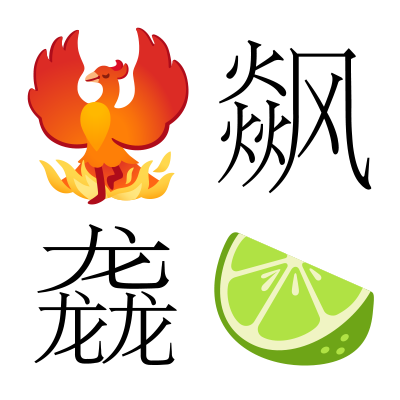
There are six completely new emoji, such as for phoenix and lime and (finally) an edible mushroom. For 108 people emoji, you can now switch the direction that they are facing (for example, person walking facing right versus facing left).

Security-related updates have been made to UAX #9, Unicode Bidirectional Algorithm and UAX #31, Unicode Identifiers and Syntax along with updates to UTS #39, Unicode Security Mechanisms. These updates complement the release of a new Unicode Technical Standard, UTS #55, Unicode Source Code Handling.

The new characters are limited to three blocks, and the code charts for several other blocks have changed. The most significant change to charts is for the CJK Unified Ideographs, CJK Unified Ideographs Extension A and CJK Unified Ideographs Extension B blocks with the addition of representative glyphs and source references for over 24,000 KP-source (North Korea) ideographs. There are also many other glyph corrections and improvements—see the 15.1 delta code charts for details.

Significant updates have been made to UAX #14, Unicode Line Breaking Algorithm and UAX #29, Unicode Text Segmentation adding better support for scripts of South and Southeast Asia, including grapheme cluster support for aksaras and consonant conjuncts, and line breaking at orthographic syllable boundaries.

For complete details on Unicode Version 15.1, see https://www.unicode.org/versions/Unicode15.1.0/.


Support Unicode
To support Unicode’s mission to ensure everyone can communicate in their languages across all devices, please consider adopting a character, making a gift of stock, or making a donation. As Unicode, Inc. is a US-based open source, open standards, non-profit, 501(c)3 organization, your contribution may be eligible for a tax deduction. Please consult with a tax advisor for details.

[badge]

Thursday, October 20, 2022

Unicode CLDR v42 available

[image] Unicode CLDR version 42 is now available and has been integrated into version 72 of ICU. In CLDR 42, the focus was on:
  1. Locale coverage. The following locales now have higher coverage levels:
    1. Modern: Igbo (ig), Yoruba, (yo)
    2. Moderate: Chuvash (cv), Xhosa (xh)
    3. Basic: Bhojpuri (bho), Haryanvi (bgc), Rajasthani (raj), Tigrinya (ti)
  2. Formatting Person Names. Added data and structure for formatting people’s names. For more information on why this feature is being added and what it does, see Background.
  3. Emoji 15.0 Support. Added short names, keywords, and sort-order for the new Unicode 15.0 emoji.
  4. Coverage, Phase 2. Added additional language names and other items to the Modern coverage level for more consistency (and utility) across platforms.
  5. Unicode 15.0 additions. Made the regular additions and changes for the new release of Unicode, including names for new scripts, collation data for Han characters, etc.
CLDR provides key building blocks for software to support the world's languages (dates, times, numbers, sort-order, etc.). For example, all major browsers and all modern mobile phones use CLDR for language support. (See Who uses CLDR?)

Via the online Survey Tool, contributors supply data for their languages — data that is widely used to support much of the world’s software. This data is also a factor in determining which languages are supported on mobile phones and computer operating systems.

There are many other changes: to find out more, see the draft CLDR v42 release page, which has information on accessing the data, reviewing charts of the changes, and — importantly — Migration issues.

In version 42, the following levels were reached:

Level Languages Locales* Notes
Modern 95 369 Suitable for full UI internationalization
Afrikaans‎, ‎… Čeština‎, ‎… Dansk‎, ‎… Eesti‎, ‎… Filipino‎, ‎… Gaeilge‎, ‎… Hrvatski‎, ‎Indonesia‎, ‎… Jawa‎, ‎Kiswahili‎, ‎Latviešu‎, ‎… Magyar‎, ‎…Nederlands‎, ‎… O‘zbek‎, Polski‎, ‎… Română‎, ‎Slovenčina‎, ‎… Tiếng Việt‎, ‎… Ελληνικά‎, Беларуская‎, ‎… ‎ᏣᎳᎩ‎, ‎ Ქართული‎, ‎Հայերեն‎, ‎עברית‎, ‎اردو‎, … አማርኛ‎, ‎नेपाली‎, … ‎অসমীয়া‎, ‎বাংলা‎, ‎ਪੰਜਾਬੀ‎, ‎ગુજરાતી‎, ‎ଓଡ଼ିଆ‎, தமிழ்‎, ‎తెలుగు‎, ‎ಕನ್ನಡ‎, ‎മലയാളം‎, ‎සිංහල‎, ‎ไทย‎, ‎ລາວ‎, မြန်မာ‎, ‎ខ្មែរ‎, ‎한국어‎, ‎… 日本語‎, ‎…
Moderate
6
11
Suitable for full “document content” internationalization, such as formats in a spreadsheet.
Binisaya, … ‎Èdè Yorùbá, ‎Føroyskt, ‎Igbo, ‎IsiZulu, ‎Kanhgág, ‎Nheẽgatu, ‎Runasimi, ‎Sardu, ‎Shqip, ‎سنڌي, …
Basic
29
43
Suitable for locale selection, such as choice of language in mobile phone settings.
Asturianu, ‎Basa Sunda, ‎Interlingua, ‎Kabuverdianu, ‎Lea Fakatonga, ‎Rumantsch, ‎Te reo Māori, ‎Wolof, ‎Босански (Ћирилица), ‎Татар, ‎Тоҷикӣ, ‎Ўзбекча (Кирил), ‎کٲشُر, ‎कॉशुर (देवनागरी), ‎…, ‎মৈতৈলোন্, ‎ᱥᱟᱱᱛᱟᱲᱤ, ‎粤语 (简体)‎
* Locales are variants for different countries or scripts.


Over 144,000 characters are available for adoption to help the Unicode Consortium’s work on digitally disadvantaged languages

[badge]

Friday, September 22, 2023

Unicode Version 15.1 – Tips for Implementers

The Unicode Version 15.1 release includes the UCD (Unicode Character Database), Code Charts, and Annexes, but the Core Specification is unchanged from Unicode Version 15.0. In addition to new characters, a small number of errata were fixed, along with improved representative glyphs. 

Implementers should also take careful note of important changes that were made to the following UAXes:
  • For UAX #9 (Unicode Bidirectional Algorithm), the text for BD16, the interaction of control flow between W4 through W6, the use of sos, and the treatment of AN/EN with brackets in N0 were clarified, and a reference to UTS #55 was added.
  • For UAX #14 (Unicode Line Breaking Algorithm), line breaking at orthographic syllable boundaries was added, the handling of French-style quotation marks was improved, and allowed tailorings were more clearly characterized.
  • For UAX #29 (Unicode Text Segmentation), explicit conformance rules were added, support for ConjunctLinker clusters was added, the definition of “crlf” was updated, and multiple changes were made to the table of Word_Break Property Values.
  • For UAX #31 (Unicode Identifiers and Syntax), multiple changes were made to Section 2, Section 4 was completely rewritten, Section 7 was added, limited contexts for joining controls was moved to UTS #39, and a reference to UTS #55 was added.
  • For UAX #38 (Unicode Han Database), 6 new provisional properties were added, 7 provisional properties were removed, the syntax of several properties was updated, and the description of several properties was improved.
  • For UAX #45 (U-Source Ideographs), records for 39 new ideographs were added to its data file, Section 3 was added, “ExtI” was added as a new status, two obsolete status values were removed, and four status values were improved.


🌻🌻🌻🌻🌻  SUPPORT UNICODE  🌻🌻🌻🌻🌻 

Finally, if you are already a contributor — or member of Unicode (or your company or organization is), thank you, Danke, Děkuju,  धन्यवाद, merci, 谢谢你, grazie, நன்றி, and gracias! What we accomplish is only possible because of supporters like you. 
 
To support Unicode’s mission to ensure everyone can communicate in their languages across all devices, please consider 
adopting a charactermaking a gift of stock, or making a donation. 

As Unicode, Inc. is a US-based open source, open standards, non-profit, 501(c)3 organization, your contribution may be eligible for a tax deduction. 

Please consult with a tax advisor for details.

Make your adoption today!

Thursday, September 29, 2022

Unicode CLDR v42 Beta — Spec Review

[beta image] The Unicode CLDR v42 Beta is now available for specification review and integration testing. The release is planned for Oct 19, but any feedback on the specification needs to be submitted well in advance of that date. The specification is available at Draft LDML Modifications. The biggest change is the new Person Names Formatting section.

The beta has already been integrated into the development version of ICU. We would especially appreciate feedback from ICU users and non-ICU consumers of CLDR data, and on Migration issues. 


Feedback can be filed at CLDR Tickets.


CLDR provides key building blocks for software to support the world's languages (dates, times, numbers, sort-order, etc.) For example, all major browsers and all modern mobile phones use CLDR for language support. (See Who uses CLDR?)


Via the online Survey Tool, contributors supply data for their languages — data that is widely used to support much of the world’s software. This data is also a factor in determining which languages are supported on mobile phones and computer operating systems.


In CLDR 42, the focus is on:


  1. Locale coverage. The following locales now have higher coverage levels:

    1. Modern: Igbo (ig), yo (Yoruba)

    2. Moderate: Chuvash (cv), Xhosa (xh)

    3. Basic: Haryanvi (bgc), Bhojpuri (bho), Rajasthani (raj), Tigrinya (ti)

  2. Formatting Person Names. Added data and structure for formatting people's names. For more information on why this feature is being added and what it does, see Background.

  3. Emoji 15.0 Support. Added short names, keywords, and sort-order for the new Unicode 15.0 emoji.

  4. Coverage, Phase 2. Added additional language names and other items to the Modern coverage level, for more consistency (and utility) across platforms.

  5. Unicode 15.0 additions. Made the regular additions and changes for a new release of Unicode, including names for new scripts, collation data for Han characters, etc.


There are many other changes: to find out more, see the draft CLDR v42 release page, which has information on accessing the date, reviewing charts of the changes, and — importantly — Migration issues.


In version 42, the following levels were reached:


Level

Languages

Locales*

Notes

Modern

95

369

Suitable for full UI internationalization

Afrikaans‎, ‎… Čeština‎, ‎… Dansk‎, ‎… Eesti‎, ‎… Filipino‎, ‎… Gaeilge‎, ‎… Hrvatski‎, ‎Indonesia‎, ‎… Jawa‎, ‎Kiswahili‎, ‎Latviešu‎, ‎… Magyar‎, ‎…Nederlands‎, ‎… O‘zbek‎, ‎Polski‎, ‎… Română‎, ‎Slovenčina‎, ‎… Tiếng Việt‎, ‎… Ελληνικά‎, ‎Беларуская‎, ‎… ‎ᏣᎳᎩ‎, ‎ Ქართული‎, ‎Հայերեն‎, ‎עברית‎, ‎اردو‎, … አማርኛ‎, ‎नेपाली‎, … ‎অসমীয়া‎, ‎বাংলা‎, ‎ਪੰਜਾਬੀ‎, ‎ગુજરાતી‎, ‎ଓଡ଼ିଆ‎, ‎தமிழ்‎, ‎తెలుగు‎, ‎ಕನ್ನಡ‎, ‎മലയാളം‎, ‎සිංහල‎, ‎ไทย‎, ‎ລາວ‎, ‎မြန်မာ‎, ‎ខ្មែរ‎, ‎한국어‎, ‎… 日本語‎, ‎…

Moderate

6

11

Suitable for full “document content” internationalization, such as formats in a spreadsheet.

Binisaya, … ‎Èdè Yorùbá, ‎Føroyskt, ‎Igbo, ‎IsiZulu, ‎Kanhgág, ‎Nheẽgatu, ‎Runasimi, ‎Sardu, ‎Shqip, ‎سنڌي, …

Basic

29

43

Suitable for locale selection, such as choice of language in mobile phone settings.

Asturianu, ‎Basa Sunda, ‎Interlingua, ‎Kabuverdianu, ‎Lea Fakatonga, ‎Rumantsch, ‎Te reo Māori, ‎Wolof, ‎Босански (Ћирилица), ‎Татар, ‎Тоҷикӣ, ‎Ўзбекча (Кирил), ‎کٲشُر, ‎कॉशुर (देवनागरी), ‎…, ‎মৈতৈলোন্, ‎ᱥᱟᱱᱛᱟᱲᱤ, ‎粤语 (简体)‎

* Locales are variants for different countries or scripts.


Over 144,000 characters are available for adoption to help the Unicode Consortium’s work on digitally disadvantaged languages

[badge]

Wednesday, May 4, 2022

Out of this World: New Astronomy Symbols Approved for the Unicode Standard

Five Trans-Neptunian Objects to Join Character Set

By Deborah Anderson, Chair of Unicode Script Ad Hoc Committee

In January 2022, the Unicode Technical Committee approved five new symbols to be published in Unicode 15.0. With the projected release date of September 2022, these symbols are based on newly discovered trans-Neptunian objects (TNOs) in the Solar System. They resulted from research efforts such as those led by astronomer and professor Dr. Michael Brown at the California Institute of Technology (CalTech).

These five objects orbit the Sun at a distance far larger than the major planets. They are currently believed to be large enough to be round, planetary worlds, in a category of objects called “dwarf planets” that also includes Ceres, Pluto, Eris and probably Sedna. The most famous trans-Neptunian object is Pluto, which historically had been considered to be the ninth planet from the Sun, but was reclassified as a dwarf planet in 2006 by the International Astronomical Union (IAU).[1]

[Pluto image]

How did this happen?

Individuals or organizations who want to propose new characters have to check existing characters to avoid duplicates, find out if there are equivalent forms already in existence, and most critically, determine the need for a digital interchange of them, such as symbols that have been encoded for use by NASA and other agencies. The proposal authors then must submit a proposal that articulates how their request meets the criteria.

Once a proposal is submitted, the Unicode Technical Committee determines whether to review the proposal and accept or decline it. This process can take a couple of years or more. In the case of these five characters, the proposers demonstrated the need, clearing the path for approval. 

Tell me more about these new characters. What are their names?

The International Astronomical Union (IAU) has standard conventions for naming objects both within and outside of the solar system. Objects orbiting the Sun outside the orbit of Neptune are named after mythological figures, particularly those associated with creation. But the subset that orbit in a two-to-three resonance with Neptune — the so-called “plutinos”, such as Pluto and Orcus — are named after figures associated with the underworld. In this case, the five TNOs, ordered by distance from the sun, are named:
  • Orcus: the Etruscan and Roman god of the underworld.
  • Haumea: the Hawaiian goddess of fertility; the telescope used to discover this object is located on Hawaiʻi.
  • Quaoar: an important mythological figure of the Tongva, the indigenous people who originally occupied the land where CalTech is located.
  • Makemake: the creator god of the Rapanui of Easter Island.
  • Gonggong: a destructive Chinese water god.
What information is there on the actual symbols that will be available?

All five symbols were designed by Denis Moskowitz, a software engineer in Massachusetts who had previously designed the Unicode symbol for Sedna. He drew inspiration from existing symbols and the “native name or culture” of the objects’ namesakes [2] to create the characters.

[TNO glyphs image]

Denis explains his inspiration for each symbol below:
  • Orcus: The symbol for Orcus is a combination of the Latin letters “O” and “R”, stylized to resemble a skull and an orca’s grin.
  • Haumea: The symbol created for Haumea was a combination and simplification of Hawaiian petroglyphs for “childbirth” and “woman”.
  • Quaoar: The symbol is the Latin letter “Q” with the tail fashioned into the shape of a canoe. The angular shape is intended to reflect Tongva rock art.
  • Makemake: The Makemake symbol is a traditional petroglyph of the face of the creator god Makemake, stylized to suggest an “M”. The design was a collaboration with John T. Whelan.
  • Gonggong: Gonggong’s symbol was based on the first Chinese character in the god’s name, 共 gòng, with a snaky tail replacing the lower section.
What else should we know?

The five symbols supplement a set of other characters for planetary objects that were published in 2018 (Unicode 11.0) and earlier. Two of the newly approved characters appear in a NASA poster. Other people have used the symbols in various media, including tattoos and art. Ultimately, these five new characters will join the 149,180 other characters in the Unicode Standard Version 15.0 and be accessible to anyone, anywhere in the world, who is using a computer or mobile device.

Where can I learn more?
Acknowledgments

Special thanks to Sarah Rivera and Kirk Miller for their contributions to this blog.


Over 144,000 characters are available for adoption to help the Unicode Consortium’s work on digitally disadvantaged languages

[badge]

Friday, August 26, 2022

Unicode CLDR v42 Alpha available for testing

[image] The Unicode CLDR v42 Alpha is now available for integration testing.

CLDR provides key building blocks for software to support the world's languages (dates, times, numbers, sort-order, etc.) For example, all major browsers and all modern mobile phones use CLDR for language support. (See Who uses CLDR?)

Via the online Survey Tool, contributors supply data for their languages — data that is widely used to support much of the world’s software. This data is also a factor in determining which languages are supported on mobile phones and computer operating systems.

The alpha has already been integrated into the development version of ICU. We would especially appreciate feedback from non-ICU consumers of CLDR data and on Migration issues. Feedback can be filed at CLDR Tickets.

Alpha means that the main data and charts are available for review, but the specification, JSON data, and other components are not yet ready for review. Some data may change if showstopper bugs are found. The planned schedule is:
  • Sep 14 — Beta (data)
  • Sep 28 — Beta2 (spec)
  • Oct 19 — Release
In CLDR 42, the focus is on:
  1. Locale coverage. The following locales now have higher coverage levels:
    1. Modern: Igbo (ig), yo (Yoruba)
    2. Moderate: Chuvash (cv), Xhosa (xh)
    3. Basic: Haryanvi (bgc), Bhojpuri (bho), Rajasthani (raj), Tigrinya (ti)
  2. Formatting Person Names. Added data and structure for formatting people's names. For more information on why this feature is being added and what it does, see Background.
  3. Emoji 15.0 Support. Added short names, keywords, and sort-order for the new Unicode 15.0 emoji.
  4. Coverage, Phase 2. Added additional language names and other items to the Modern coverage level, for more consistency (and utility) across platforms.
  5. Unicode 15.0 additions. Made the regular additions and changes for a new release of Unicode, including names for new scripts, collation data for Han characters, etc.
There are many other changes: to find out more, see the draft CLDR v42 release page, which has information on accessing the date, reviewing charts of the changes, and — importantly — Migration issues.

In version 42, the following levels were reached:

Level Languages Locales* Notes
Modern 94 366 Suitable for full UI internationalization
Afrikaans‎, ‎… Čeština‎, ‎… Dansk‎, ‎… Eesti‎, ‎… Filipino‎, ‎… Gaeilge‎, ‎… Hrvatski‎, ‎Indonesia‎, ‎… Jawa‎, ‎Kiswahili‎, ‎Latviešu‎, ‎… Magyar‎, ‎…Nederlands‎, ‎… O‘zbek‎, Polski‎, ‎… Română‎, ‎Slovenčina‎, ‎… Tiếng Việt‎, ‎… Ελληνικά‎, Беларуская‎, ‎… ‎ᏣᎳᎩ‎, ‎ Ქართული‎, ‎Հայերեն‎, ‎עברית‎, ‎اردو‎, … አማርኛ‎, ‎नेपाली‎, … ‎অসমীয়া‎, ‎বাংলা‎, ‎ਪੰਜਾਬੀ‎, ‎ગુજરાતી‎, ‎ଓଡ଼ିଆ‎, தமிழ்‎, ‎తెలుగు‎, ‎ಕನ್ನಡ‎, ‎മലയാളം‎, ‎සිංහල‎, ‎ไทย‎, ‎ລາວ‎, မြန်မာ‎, ‎ខ្មែរ‎, ‎한국어‎, ‎… 日本語‎, ‎…
Moderate
7
11
Suitable for full “document content” internationalization, such as formats in a spreadsheet.
Binisaya, … ‎Èdè Yorùbá, ‎Føroyskt, ‎Igbo, ‎IsiZulu, ‎Kanhgág, ‎Nheẽgatu, ‎Runasimi, ‎Sardu, ‎Shqip, ‎سنڌي, …
Basic
29
43
Suitable for locale selection, such as choice of language in mobile phone settings.
Asturianu, ‎Basa Sunda, ‎Interlingua, ‎Kabuverdianu, ‎Lea Fakatonga, ‎Rumantsch, ‎Te reo Māori, ‎Wolof, ‎Босански (Ћирилица), ‎Татар, ‎Тоҷикӣ, ‎Ўзбекча (Кирил), ‎کٲشُر, ‎कॉशुर (देवनागरी), ‎…, ‎মৈতৈলোন্, ‎ᱥᱟᱱᱛᱟᱲᱤ, ‎粤语 (简体)‎

* Locales are variants for different countries or scripts.


Over 144,000 characters are available for adoption to help the Unicode Consortium’s work on digitally disadvantaged languages

[badge]

Wednesday, June 8, 2022

Unicode CLDR Version 42 Submission Open

[ballot box image] The Unicode CLDR Survey Tool is open for submission for version 42. CLDR provides key building blocks for software to support the world's languages (dates, times, numbers, sort-order, etc.) For example, all major browsers and all modern mobile phones use CLDR for language support. (See Who uses CLDR?)
Via the online Survey Tool, contributors supply data for their languages — data that is widely used to support much of the world’s software. This data is also a factor in determining which languages are supported on mobile phones and computer operating systems.

Version 42 is focusing on:
  • Additional Coverage
    • Unicode 15.0 additions: new emoji, script names, collation data (Chinese & Japanese), …
    • New Languages: Adding Haryanvi, Bhojpuri, Rajasthani at a Basic level.
    • Up-leveling: Xhosa, Hinglish (Hindi-Latin), Nigerian Pidgin, Hausa, Igbo, Yoruba, and Norwegian Nynorsk.
  • Person Name Formatting: for handling the wide variety in the way that people’s names work in different languages.
    • People may have a different number of names, depending on their culture--they might have only one name (“Zendaya”), two (“Albert Einstein”), or three or more.
    • People may have multiple words in a particular name field, eg “Mary Beth” as a given name, or “van Berg” as a surname.
    • Some languages, such as Spanish, have two surnames (where each can be composed of multiple words).
    • The ordering of name fields can be different across languages, as well as the spacing (or lack thereof) and punctuation.
    • Name formatting need to be adapted to different circumstances, such as a need to be presented shorter or longer; formal or informal context; or when talking about someone, or talking to someone, or as a monogram (JFK).
Submission of new data opened recently, and is slated to finish on June 22. The new data then enters a vetting phase, where contributors work out which of the supplied data for each field is best. That vetting phase is slated to finish on July 6. A public alpha makes the draft data available around August 17, and the final release targets October 19.

Each new locale starts with a small set of Core data, such as a list of characters used in the language. Submitters of those locales need to bring the coverage up to Basic level (very basic basic dates, times, numbers, and endonyms) during the next submission cycle. In version 41, the following levels were reached:

Level Languages Locales* Notes
Modern 89 361 Suitable for full UI internationalization
Afrikaans‎, ‎… Čeština‎, ‎… Dansk‎, ‎… Eesti‎, ‎… Filipino‎, ‎… Gaeilge‎, ‎… Hrvatski‎, ‎Indonesia‎, ‎… Jawa‎, ‎Kiswahili‎, ‎Latviešu‎, ‎… Magyar‎, ‎…Nederlands‎, ‎… O‘zbek‎, ‎Polski‎, ‎… Română‎, ‎Slovenčina‎, ‎… Tiếng Việt‎, ‎… Ελληνικά‎, ‎Беларуская‎, ‎… ‎ᏣᎳᎩ‎, ‎ Ქართული‎, ‎Հայերեն‎, ‎עברית‎, ‎اردو‎, … አማርኛ‎, ‎नेपाली‎, … ‎অসমীয়া‎, ‎বাংলা‎, ‎ਪੰਜਾਬੀ‎, ‎ગુજરાતી‎, ‎ଓଡ଼ିଆ‎, ‎தமிழ்‎, ‎తెలుగు‎, ‎ಕನ್ನಡ‎, ‎മലയാളം‎, ‎සිංහල‎, ‎ไทย‎, ‎ລາວ‎, ‎မြန်မာ‎, ‎ខ្មែរ‎, ‎한국어‎, ‎… 日本語‎, ‎…
Moderate 13 32 Suitable for full “document content” internationalization, such as formats in a spreadsheet.
Binisaya, … ‎Èdè Yorùbá, ‎Føroyskt, ‎Igbo, ‎IsiZulu, ‎Kanhgág, ‎Nheẽgatu, ‎Runasimi, ‎Sardu, ‎Shqip, ‎سنڌي, …
Basic 22 21 Suitable for locale selection, such as choice of language in mobile phone settings.
Asturianu, ‎Basa Sunda, ‎Interlingua, ‎Kabuverdianu, ‎Lea Fakatonga, ‎Rumantsch, ‎Te reo Māori, ‎Wolof, ‎Босански (Ћирилица), ‎Татар, ‎Тоҷикӣ, ‎Ўзбекча (Кирил), ‎کٲشُر, ‎कॉशुर (देवनागरी), ‎…, ‎মৈতৈলোন্, ‎ᱥᱟᱱᱛᱟᱲᱤ, ‎粤语 (简体)‎
* Locales are variants for different countries or scripts.

If you would like to contribute missing data for your language, see Survey Tool Accounts. For more information on contributing to CLDR, see the CLDR Information Hub.


Over 144,000 characters are available for adoption to help the Unicode Consortium’s work on digitally disadvantaged languages

[badge]

Tuesday, August 27, 2024

Highlights from Unicode Technical Meeting #180

by Peter Constable, UTC Chair

Unicode Technical Committee (UTC) meeting #180 was held July 23 – 25 in Redmond, Washington, hosted by Microsoft. Here are some highlights.

Finalizing Unicode 16.0

One priority was to finalize technical decisions for Unicode 16.0 in preparation for a September 10 release. Beta feedback and a small number of new proposals were considered and various decisions affecting 16.0 were taken. Regarding the set of encoded characters and emoji sequences for Unicode 16.0, no changes were made from the Beta.

Unicode 16.0 will include major additions and improvements for Egyptian Hieroglyphs, most of which were already included in the Beta. One aspect of the improvements is a refinement in the encoding model for rotational variants using variation sequences. Since the Beta, it was recognized that ten of the Egyptian Hieroglyph encoded as characters in Unicode 5.2 would be better represented using rotational variation sequences. This led to some new UTC decisions affecting the 16.0 release:
  • Ten standardized variation sequences for Egyptian Hieroglyph rotational variants were added, while one standardized variation sequence that had been added in Unicode 15.0 was rescinded.
  • In the Unikemet.txt data file with Egyptian Hieroglyph properties, the kEH_Core property has been changed from a binary property to having an enumeration of values, one of which is “L(egacy)” indicating characters encoded in Unicode 5.2 that are not part of the core set and are not expected to be supported in fonts.
Another significant change affecting the 16.0 release is a glyph change for U+0620 ARABIC LETTER KASHMIRI YEH, and a change to its joining group in ArabicShaping.txt (180-C23, 180-C24). This affects not only the glyph shown in the code chart, but also the positional forms shown in the Arabic section of the core spec. The need for this arose from incorrect information in the core spec resulting in fonts that don’t provide a final form that matches users’ expectations. See L2/24-152 for background details.

While no further changes were made to the set of emoji in Unicode 16.0, a change will be made in how emoji characters are displayed in the code charts. The technology used to produce the chart pages is not able to display full-color emoji, and up to now the code charts have not made it clear when pictographic symbols have the Emoji property. In Unicode 16.0, characters with the Emoji property will be indicated in the code charts with a small triangular badge in the top left corner of the cell. A white triangle will indicate an emoji character that should have default emoji (full color) presentation:

A black and white sign with a clock
A black triangle will indicate an emoji character that should have default text (monochrome) presentation:

A rectangular sign with a grid and numbers
The script descriptions in the core spec are used to provide background information on each script as well as information to guide implementations. For many scripts, it has been a challenge to provide comprehensive guidance for implementations, particularly when there are complex rendering requirements. However, some implementers have written Unicode Technical Notes providing guidance for implementation of a particular script. Although these are not normative specifications approved by UTC, they can still be valuable information conducive to interoperable implementations. For Unicode 16.0, UTC decided to have two existing UTNs referenced within the core spec sections for the respective scripts:
As mentioned for the Beta, the core spec for Unicode 16.0 will be published as per-chapter HTML pages.

Characters for future versions

At UTC #180, code points were provisionally assigned for 1,063 new characters, including 38 Arabic characters, 45 characters for phonetic transcription, and 965 ideographs and radicals for Jurchen script. With these characters in the pipeline, work can get started on property data, charts, and other content that will be needed for them to be encoded in a future version of the standard.

Some initial decisions were also taken on the character additions for Unicode 17.0: as IRG had finalized its recommendations for CJK Unified Ideographs Extension J, that block of 4,300 new ideographs has been approved for encoding in Unicode 17.0.

Also, a proposal was approved to disunify one existing CJK unified ideograph character, U+5CC0 in Unicode 17.0. When U+5CC0 was encoded in Unicode 1.1, it was deemed that two similar ideographs should be unified. The proposal demonstrated that this unification should not have been made, and that was confirmed earlier this year by IRG. The changes for 17.0 will include encoding of a new character, U+2B73A, and revision of the source references for 5CC0, 2B73A and 2F879. A complication in this case is that ideographic variation sequences for the two distinct glyphs have been registered for use in Japan. No changes in “J” source references will be made, and it is not expected that implementations for Japanese will be affected. For additional information, see section 7 of L2/24-165.

Variation sequences and historic scripts

People working with historic scripts often deal with glyph variations. Variation sequences seem like an appropriate encoding mechanism to use in such cases, though asking UTC to standardize variation sequences for many historic variations could seem like a challenge. With that in mind, a proposal was presented to encode a block of additional "user-defined" variation selector characters. These would be additional PUA characters with a constraint that they would only be used as variation selectors.

That proposed solution is problematic: existing stability policies and commitments prevent assigning more PUA code points and also prevent constraining existing PUA for certain uses. At the same time, there was opinion within UTC that the need expressed was reasonable, and there was openness to considering alternative solutions. One potential alternative that gained some interest was to establish a registration process, similar to what is defined in UTS #37 for ideographic variation sequences but intended for use with historic scripts.

For complete details on outcomes from UTC #180, see the draft minutes.


Adopt a Character and Support Unicode’s Mission

Looking to give that special someone a special something?
Or maybe something to treat yourself?
🕉️💗🏎️🐨🔥🚀爱₿♜🍀

Adopt a character or emoji to give it the attention it deserves, while also supporting Unicode’s mission to ensure everyone can communicate in their own languages across all devices.

Each adoption includes a digital badge and certificate that you can proudly display!

Have fun and support a good cause

You can also donate funds or gift stock


As Unicode, Inc. is a US-based open source, open standards, non-profit, 501(c)3 organization, your contribution may be eligible for a tax deduction. Please consult with a tax advisor for details.